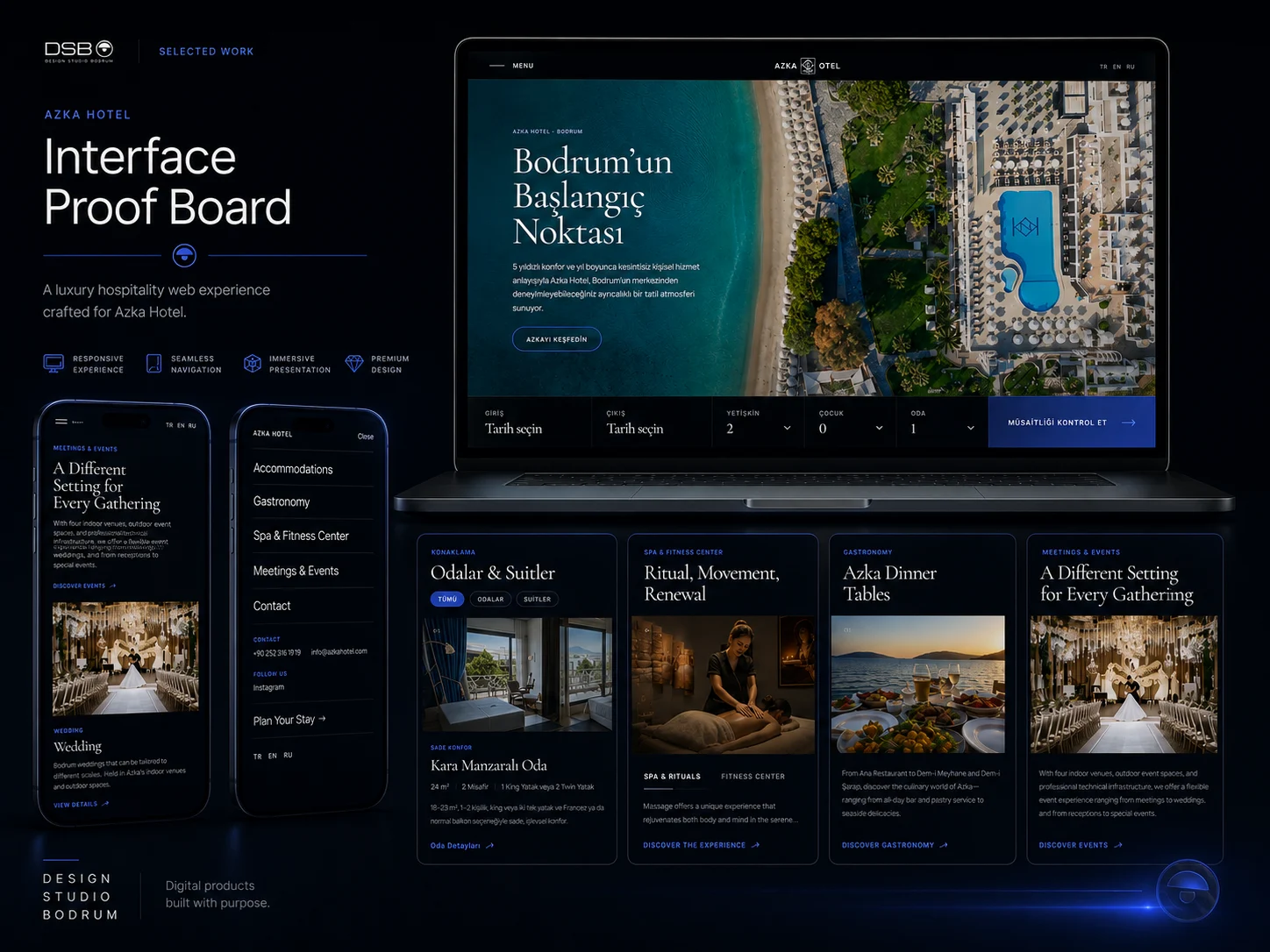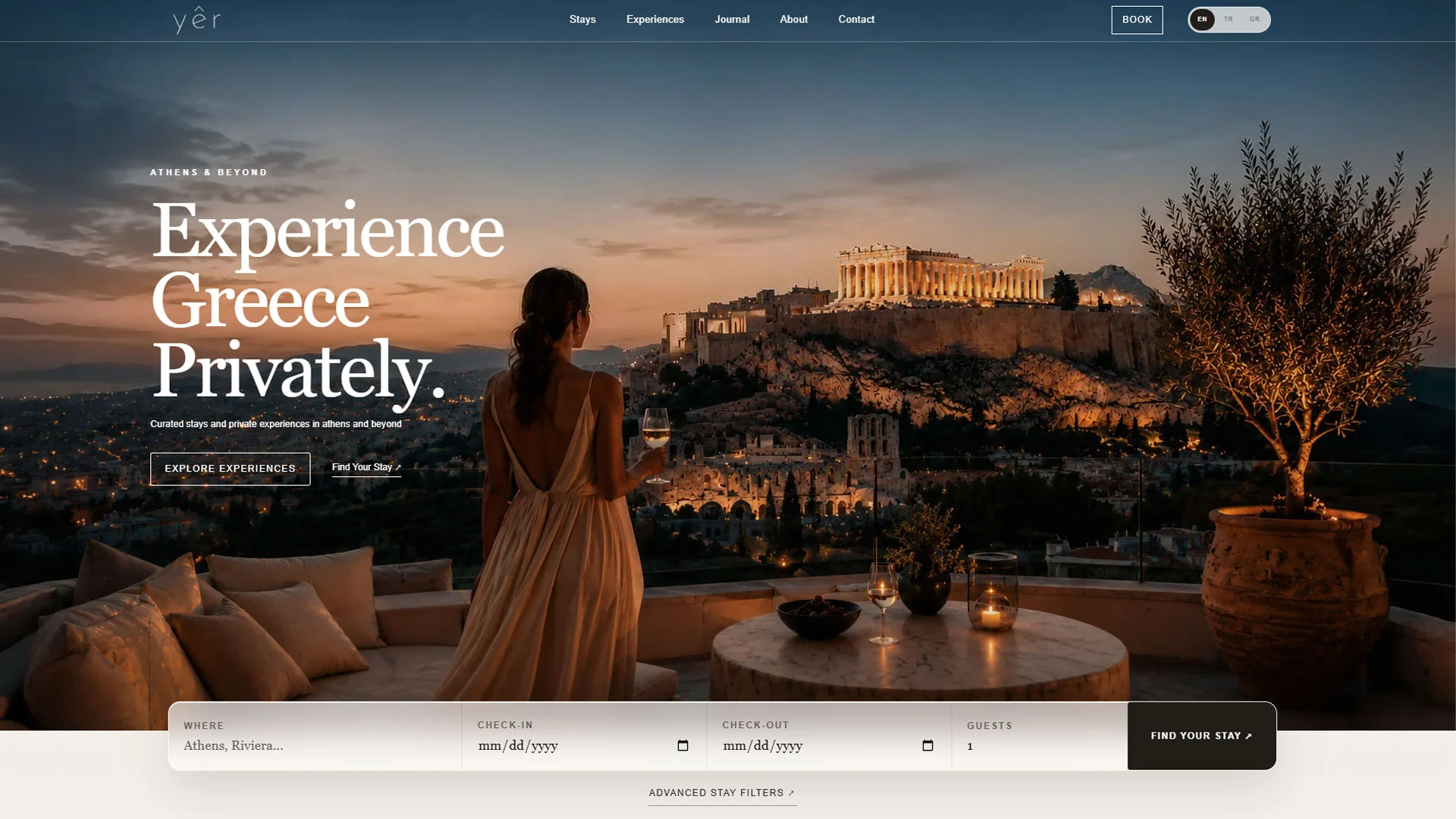
A hotel website is an experience layer
A strong hotel website should make the property understandable before it tries to make it impressive. Rooms, dining, beach, wellness, location and offers need a clear hierarchy that works especially well on mobile.
Visual quality is part of the product
Hospitality is highly visual, but photography and motion only work when they support the decision. The interface should give imagery enough space without making information difficult to reach.
The website should not become an isolated island
Booking, guest information, menus and internal hotel services often live in different systems. A better architecture decides where each responsibility belongs and then connects those experiences coherently.
Manageability matters after launch
The hotel should be able to keep important content current without breaking the design. A controlled content system is therefore part of the guest experience, not simply an admin feature.
Measure the right outcome
The useful question is not whether the website looks luxurious. It is whether guests understand the hotel faster, reach the right action with less friction and receive a consistent experience across the digital journey.