An OTA and a hotel website solve different problems
A marketplace helps a traveller compare many properties. The hotel’s own site should help the same traveller become confident about one specific property.
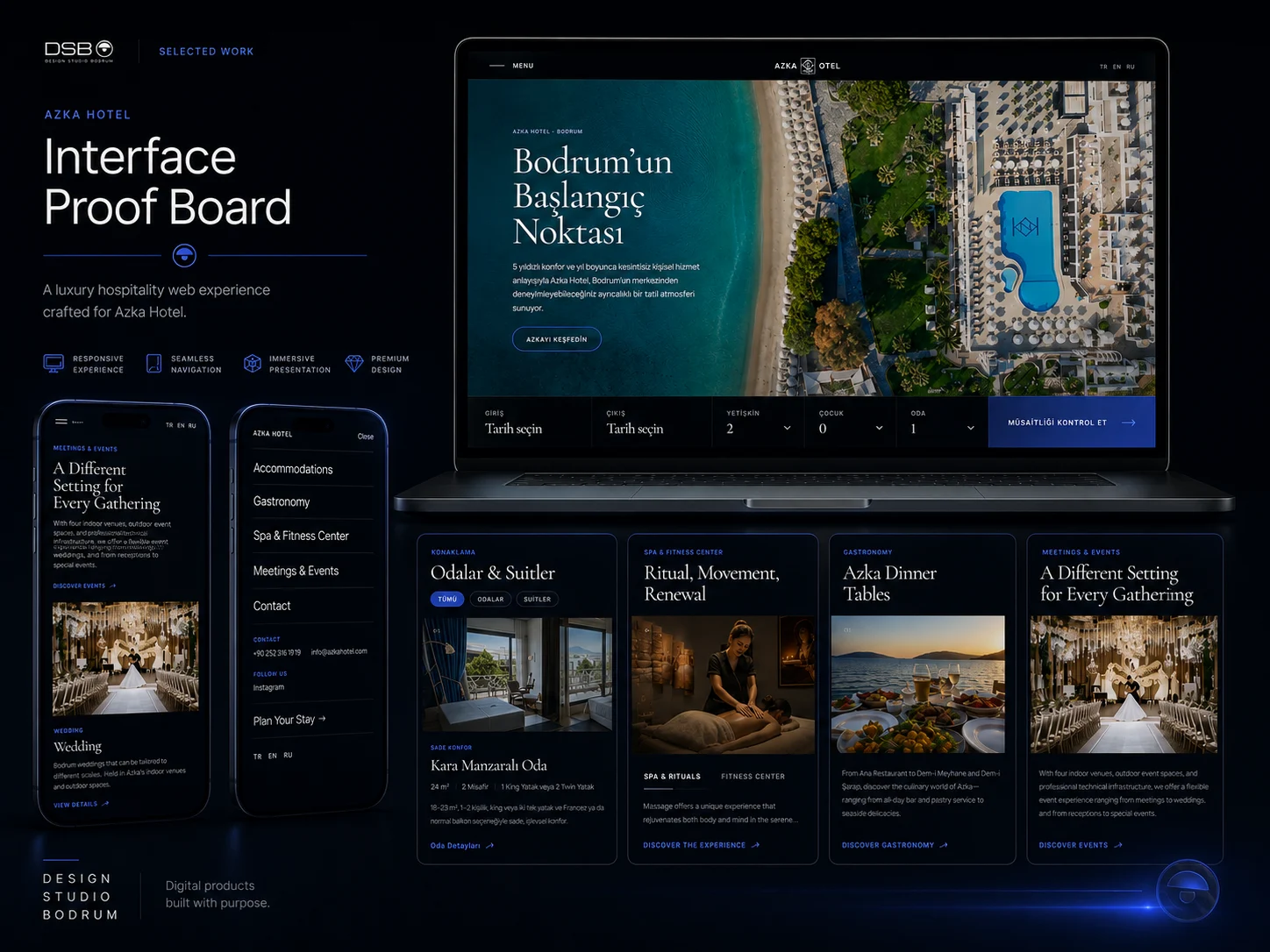
Copying an OTA structure onto a branded website throws away that advantage. The Hotel Website Design in Bodrum approach should start from the guest’s questions, not from the marketplace’s template.
The hotel website can explain what comparison cards cannot
OTA listings need standardised fields because they compare thousands of properties. Your own website can explain context: which room is quieter, where breakfast is served, what the beach feels like, how the property relates to Bodrum, who a particular room is best for and what the guest can do without leaving the hotel.
That information is useful for people and also gives search systems clearer factual material than image-only pages.
Direct booking needs a visible path, not aggressive pressure
The objective is not to hide every other channel. It is to make the direct path obvious when the guest is ready.
- keep booking actions available at natural decision points
- preserve dates and room intent when handing off to a booking engine where possible
- explain direct-booking benefits only when they are real
- keep phone, email or WhatsApp visible for high-consideration questions
A booking widget should support the brand experience, not become the entire interface.
Room pages deserve their own information architecture
“Deluxe Room” plus six images and a list of icons is often insufficient. Useful room pages can answer:
- occupancy and bed configuration
- approximate size
- view or location within the property
- bathroom and key amenities
- who the room is most suitable for
- included services and important conditions
- clear next action
This reduces uncertainty before the guest reaches the booking engine.
Mobile performance is part of hospitality UX
Guests research while travelling, moving between Instagram, Maps, messages and search results. Heavy hero videos, uncompressed galleries and third-party scripts can make a visually impressive hotel site frustrating in the exact context in which it is used most.
Image formats, responsive sizes, loading strategy and controlled motion matter as much as the desktop art direction.
Location content should help a guest make a travel decision
A map pin alone does not explain the property’s position. Useful location content can clarify airport transfer, Bodrum centre, nearby bays, marina access, beach context or the type of neighbourhood — only where those facts are genuinely relevant.
Operations can stay separate while the guest sees one experience
Booking engines, property-management tools, digital menus, payments and guest-service systems may be specialist products. They do not need to be rebuilt inside the website. The job is to connect them coherently.
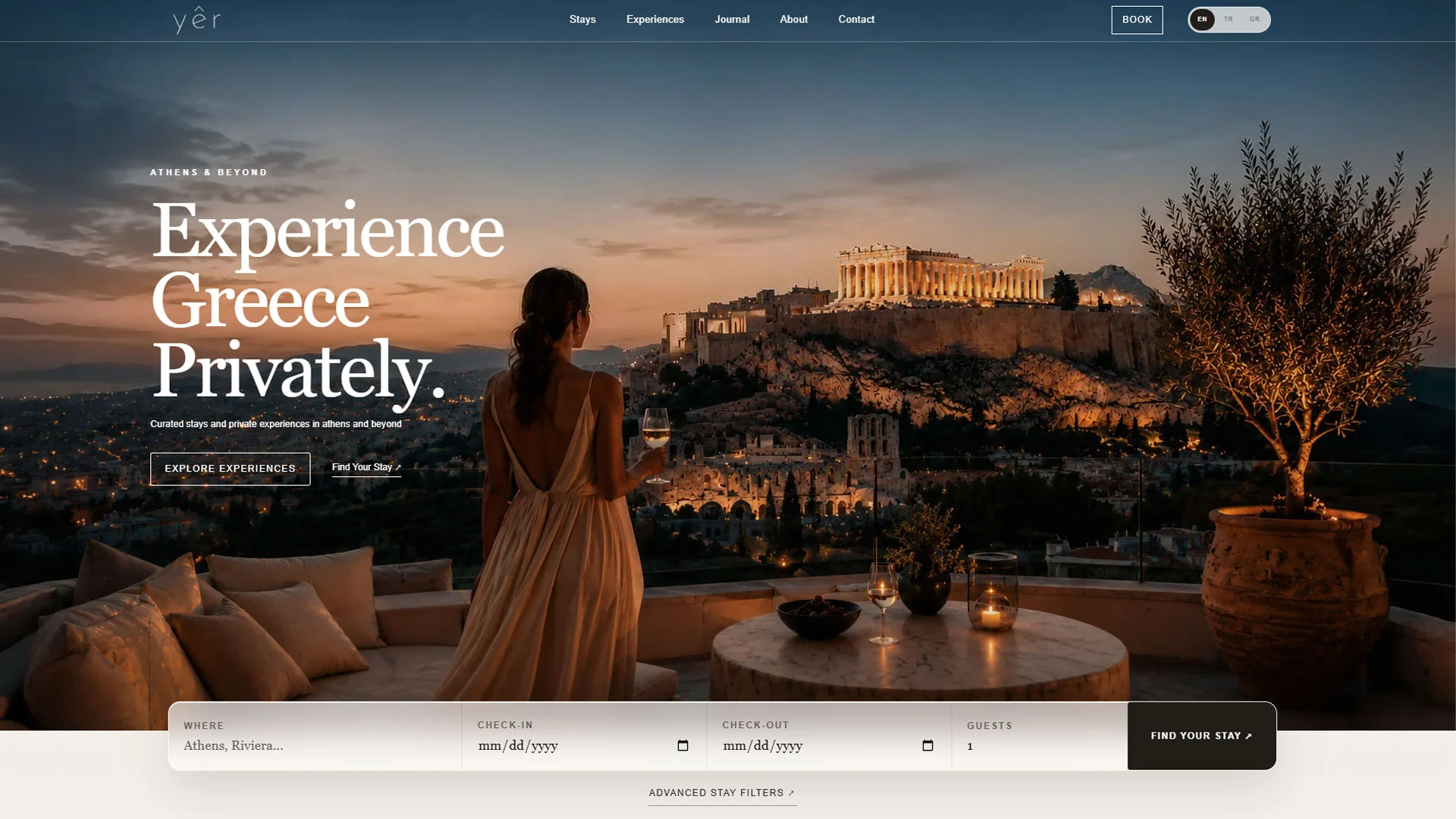
Projects such as YER Living show why public speed and background hospitality operations sometimes need different technical layers.
The hotel site is the place where the brand can be complete
An OTA listing is important distribution. It is not a substitute for a hotel’s own digital identity.
A good hotel website should let a guest understand the property more deeply, move to direct action with less uncertainty and still remain fast enough to use on a phone. That is a different job — and it deserves a different architecture.