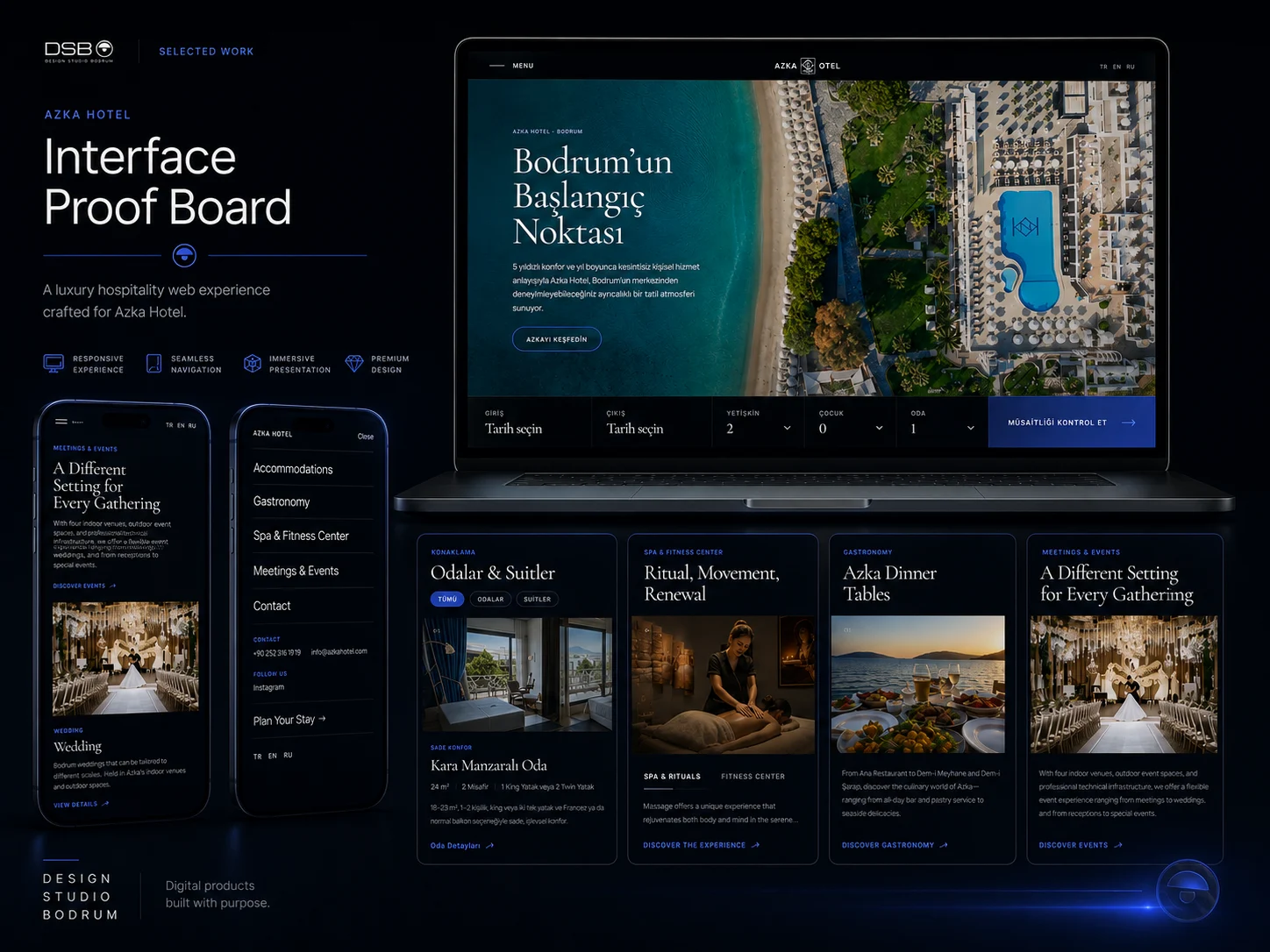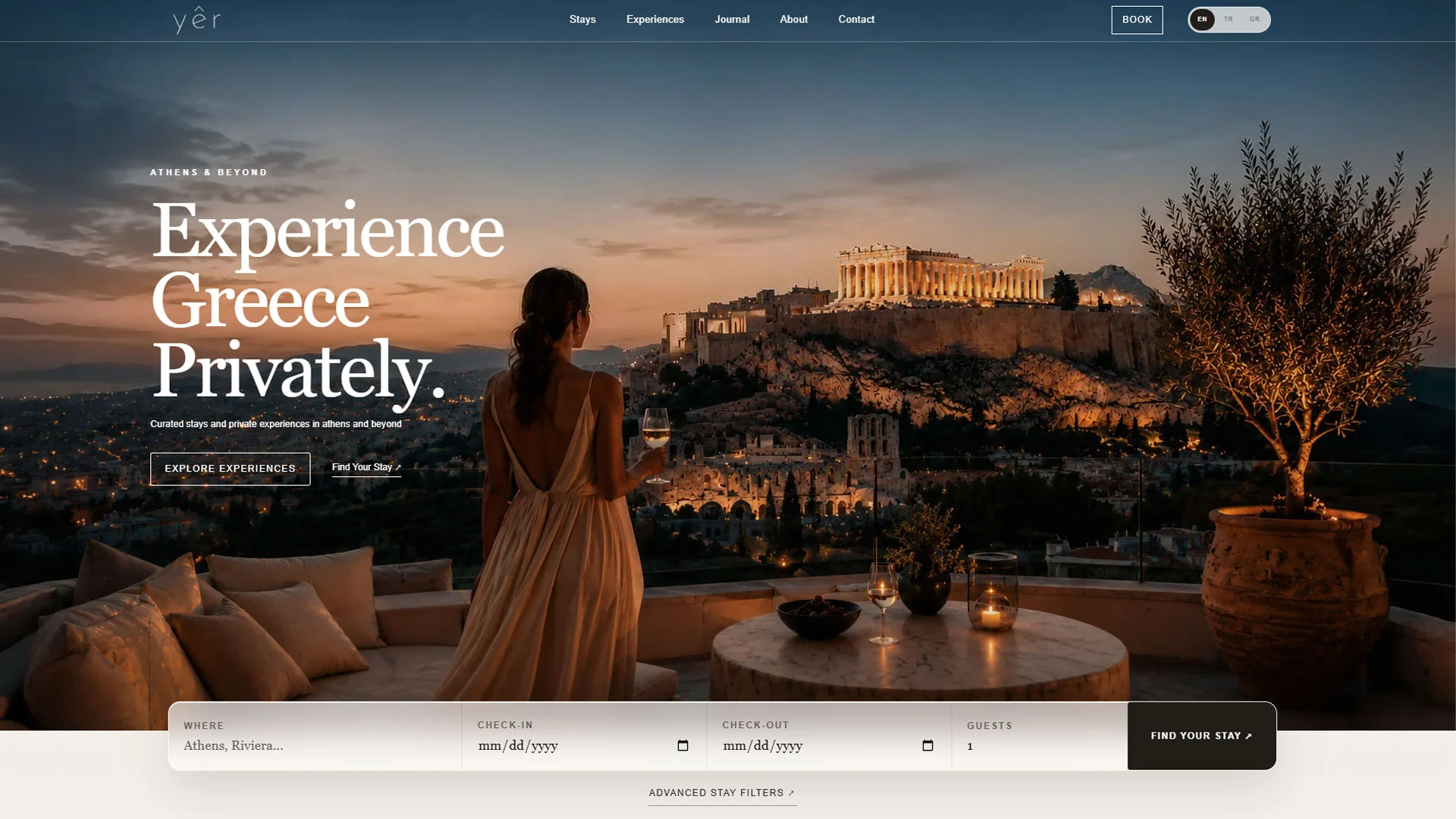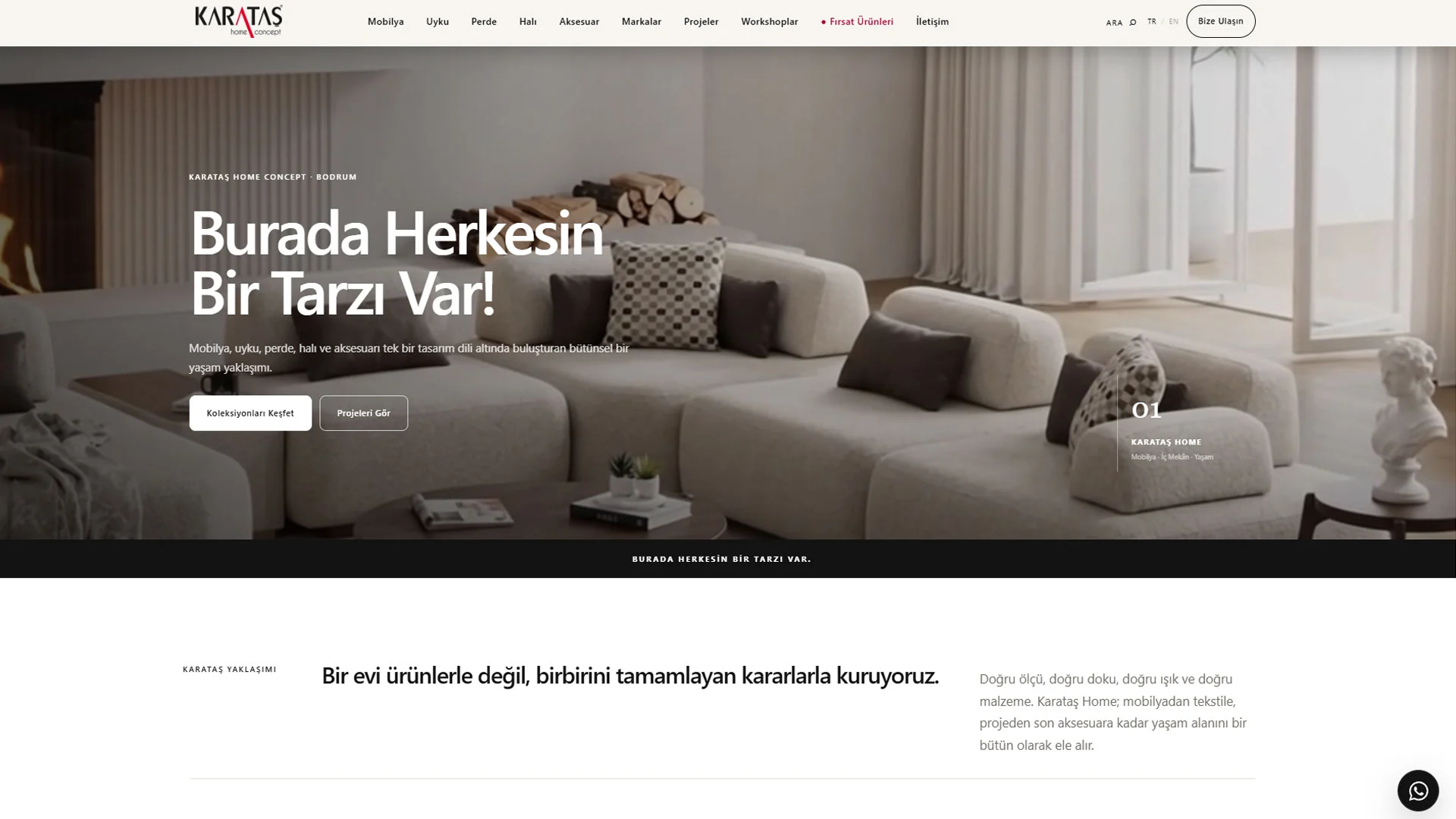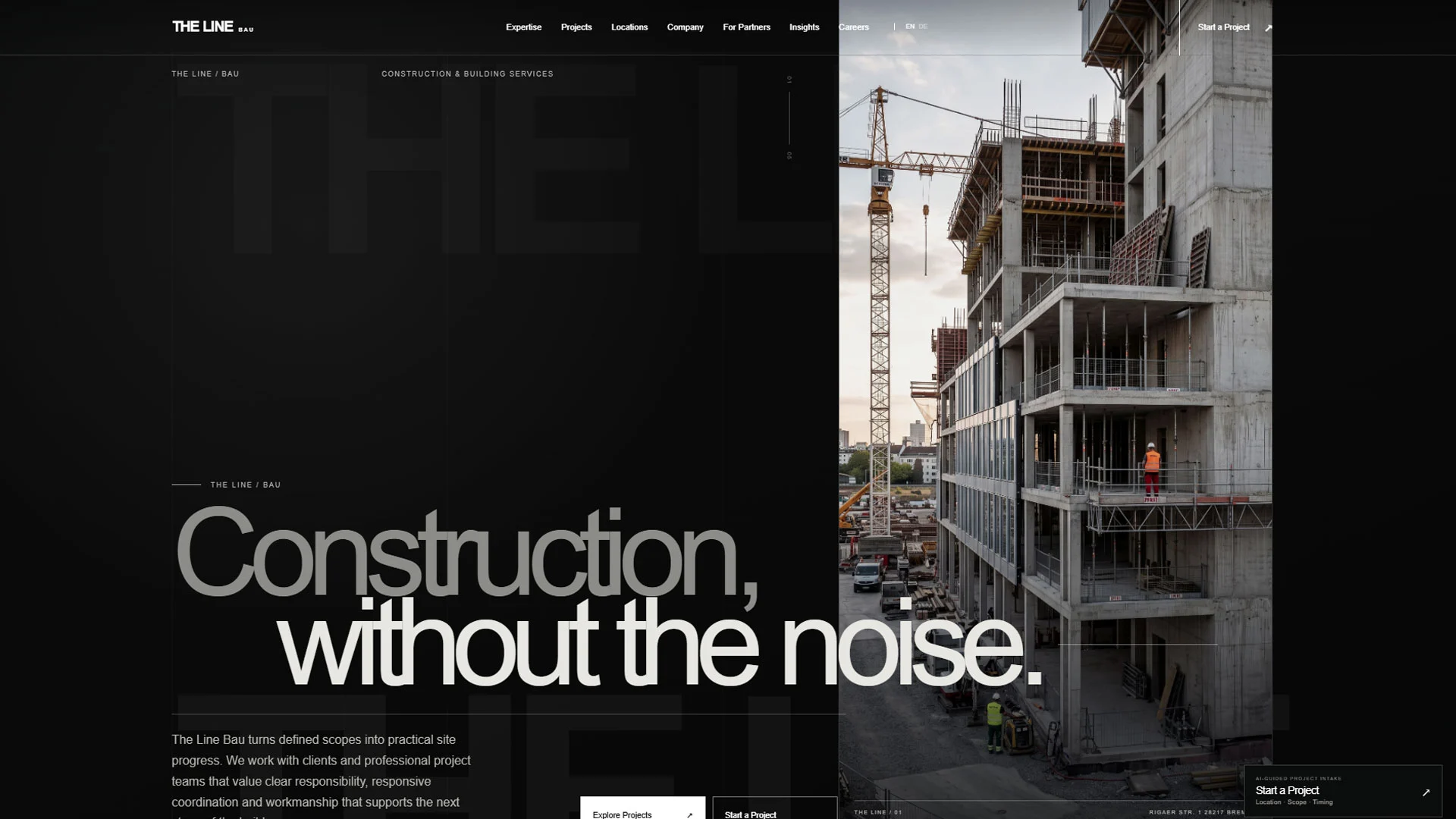
Start with the business problem, not the page count
A website proposal can look precise because it lists pages, but “8 pages” says very little about what the website must achieve. A hotel, architecture studio, restaurant and real-estate business may all need eight pages for completely different reasons.
Before requesting a proposal, define the decision the website needs to help a visitor make. The Bodrum Web Design service is built around that question first.
1. What should the website make more likely?
A call, a reservation, a project enquiry, a showroom visit, an online purchase or a qualified sales conversation are different conversion goals. Pick the primary one before discussing visual style.
2. Who is the most valuable visitor?
Local customer, international traveller, property buyer, architect, procurement team or business partner? The answer changes language, navigation, proof and CTA structure.
3. Why should someone choose this business instead of the next result?
A website needs real reasons: experience, location, process, product quality, specialist capability, service model or proven work. Generic words such as “premium” and “innovative” are not evidence.
4. What information does a customer need before contacting you?
List the questions that repeatedly arrive by phone, WhatsApp or email. The site should answer enough of them to improve the quality of the next conversation.
5. What content already exists — and what must be produced?
Good structure cannot compensate for missing project photography, room information, product data, team bios or service descriptions. Decide early who owns text, photography, video, drone or 360° production.
6. Does the business need more than one language?
For hospitality, real estate and yachting in Bodrum this is often a commercial requirement, not a cosmetic extra. Language architecture should be planned from the beginning so URLs, menus, SEO and future editing remain manageable.
7. Which systems must the website connect to?
Booking engines, CRM, WhatsApp, payment providers, inventory, property feeds, digital menus, email tools and analytics can materially change the build. Ask whether an integration is real-time, cached, manual or simply a link to another service.
8. Who will update the website after launch?
A client-facing CMS should be designed around real recurring jobs. If staff only change projects, rooms, products or offers, the administration interface should make those tasks obvious instead of exposing unnecessary technical settings.
9. What does “SEO included” actually mean?
At minimum, clarify technical crawlability, titles and descriptions, headings, canonical URLs, sitemap, structured data, performance and internal linking. Long-term SEO also needs content, local signals, measurement and sometimes external authority — it is not a checkbox installed on launch day.
10. Is AI-assisted discovery part of the information architecture?
Search is no longer only ten blue links. Clear facts about who the business is, where it operates, what it provides and which work proves that expertise help both conventional search and AI-assisted discovery systems understand the brand. See the guide on Google and AI search visibility.
11. How will success be measured?
Agree on what will be tracked: qualified enquiries, booking clicks, calls, WhatsApp conversations, quote requests, product sales or another useful action. Traffic without business context can be misleading.
12. What happens after launch?
Ask about hosting, backups, security, updates, analytics, content changes, response time and ownership of the website, domain and data. A website is an operating asset, not only a launch event.
A better proposal starts with a better brief
If two suppliers are quoting against different assumptions, comparing only the total price is almost meaningless. A short discovery phase creates a common scope and makes it easier to see what is genuinely included.
For a Bodrum business, the useful first conversation is not “How many pages do you want?” It is “What should the site make easier for the customer and the business?” If that is clear, design and technology decisions become much more rational.